
BYD Large Lithium Ore Stockpile Smart Inventory Case | 3D LiDAR System Powers Digital Silo Inventory Management
Non-contact, full-coverage, interference-resistant smart inventory — counting efficiency up over 90%
1. Project overview: digital upgrade needs for BYD’s large pit silo
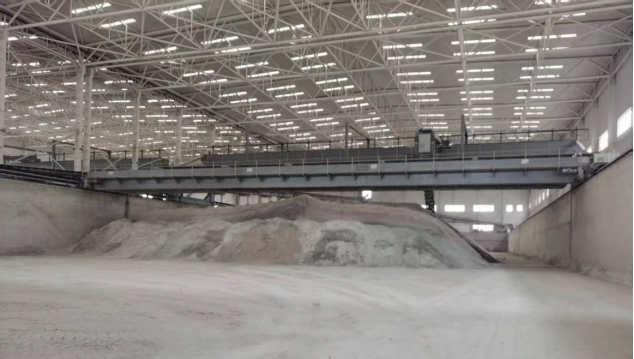
As a new-energy industry leader, BYD’s lithium ore storage base uses a rectangular pit silo: 160.4 m east–west, 42 m north–south, 6 m vertical pit depth, with the roof about 20 m above the pit floor. A material conveyor in the middle of the silo is a measurement interference source. As capacity grew, traditional inventory methods could no longer meet continuous production, fine inventory management, and safety compliance. After comparing options, BYD chose the Shiju Network 3D LiDAR stocktaking system to build a large-silo intelligent inventory benchmark.
2. Enterprise pain points
Like large bulk silos, pit yards, and open stockpiles across mining, building materials, new energy, and grain, BYD faced four core pain points that severely constrained productivity and management upgrades:
- Manual stocktaking is slow and inaccurate: tape measures, rangefinders, and estimates can take multiple people several days on a large silo, with metering error of 5%–15%, causing book–reality mismatch, distorted cost accounting, and scheduling mistakes;
- Harsh environment and high safety risk: heavy dust, confined spaces, pile collapse risk, and machine interference make entering the silo hazardous;
- Traditional equipment is limited: single-point level gauges measure height but not volume; portable radars need manual operation and poor timeliness; multiple independent systems create data silos;
- Interference is hard to handle: conveyors, loaders, people, and other dynamic objects inside the silo disrupt ordinary systems that cannot filter them effectively.
With policies such as the Work Plan for Digital Transformation of the Raw Materials Industry (2024–2026) and guidance on advancing mine intelligence and safety, demand for precise bulk metering, intelligent control, safe efficiency, and data interoperability has become more urgent.
3. Solution: multi-scenario intelligent bulk stockpile inventory system
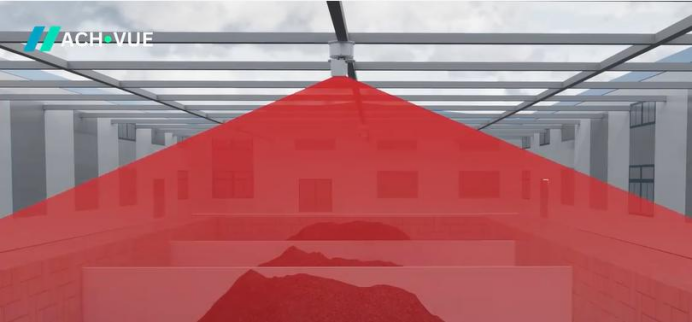
Based on proprietary 3D LiDAR technology plus edge computing, AI point-cloud processing, and a distributed architecture, Shiju Network customized a non-contact, full-coverage, interference-resistant, and scalable intelligent stocktaking system for BYD.
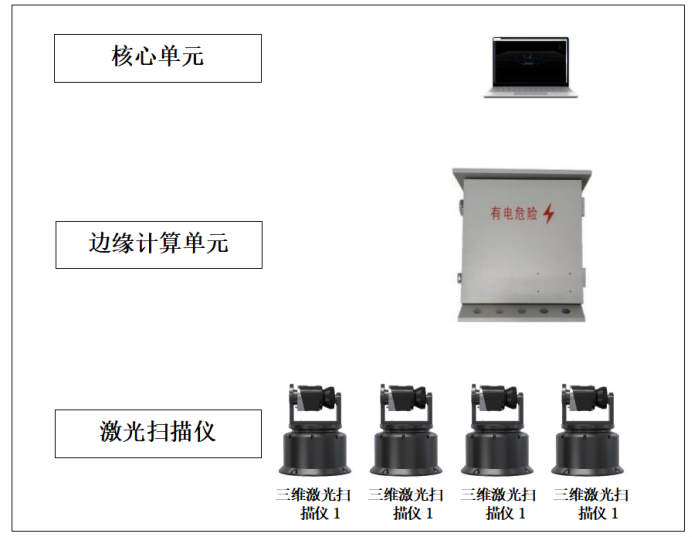
1. System architecture (distributed, stable, and reliable)
- 3D LiDAR scanners: 180° rotating scan with high-frequency capture of stockpile 3D point clouds;
- LiDAR switch cabinet: each cabinet supports 4 LiDARs for multi-device coverage of large yards;
- Distributed core units: each core supports 5 switch cabinets; faults do not cascade and the system keeps running;
- Edge computing + management platform: real-time processing, 3D modeling, automatic accounting, and remote access.
2. Core technical capabilities (directly addressing BYD silo pain points)
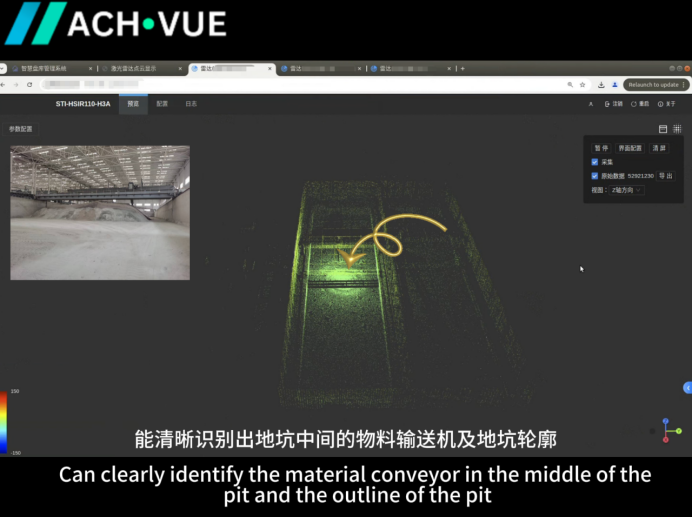
- AI object recognition and interference filtering: intelligently identify and remove dynamic interference clouds from conveyors, people, and vehicles so volume and weight calculations stay accurate;
- Multi-sensor registration and seamless stitching: support rotation/translation calibration across multiple LiDARs so ultra-large or elongated yards get full coverage without blind spots;
- Blind-spot data compensation: automatically compensate structural dead zones to keep whole-silo metering complete;
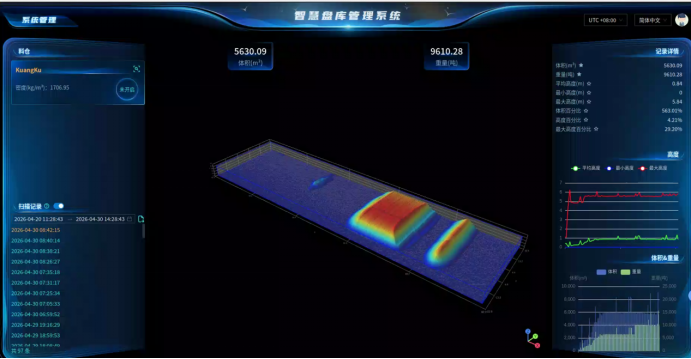
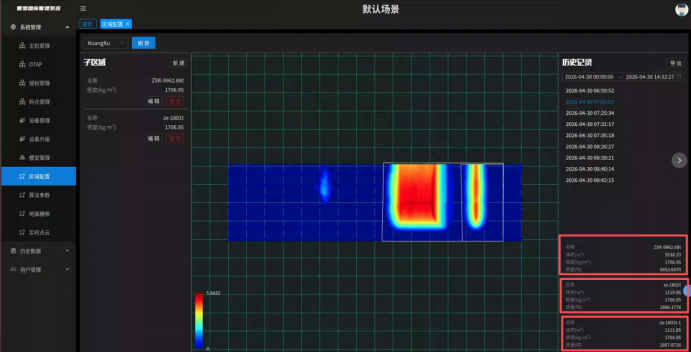
- Custom zone planning: freely divide by material type and storage area; the system auto-computes volume and weight per zone and supports multi-material management.
3. Feature coverage (full digital management needs)
- Real-time 3D visualization of the yard;
- Automatic volume/weight conversion (custom density supported);
- High/low level threshold alarms, device self-check, and proactive anomaly reporting;
- Scheduled stocktaking plans and historical data traceability;
- User permission management and operation logs;
- ERP/MES integration, HTTP remote access, and automatic report export.
4. Implementation results: measurable cost reduction and efficiency gains
- Much higher efficiency: stocktaking shortened from several manual days to within 15 minutes without stopping production—efficiency up over 90%;
- Accurate, reliable metering: automatic volume and weight accounting with error within 2%, ending book–reality mismatch;
- Fundamentally safer: no need for people to enter the silo for bottom checks, reducing high-risk operations and accidents;
- Lower cost: large labor savings on stocktaking—hundreds of thousands of RMB per year—with very low O&M cost;
- Full management upgrade: inventory data is real-time, queryable, and traceable, supporting precise purchasing, scientific scheduling, and fine cost accounting.
5. Industry value: from the BYD case to broader applications
Successful deployment of the Shiju Network 3D LiDAR stocktaking system at BYD validates generality and reliability for large, complex, interference-rich, ultra-large bulk stockpile scenes, and can be widely applied to:
- New energy: lithium ore, lithium salt, and cathode material silos;
- Mining: coal, iron ore, and non-metallic mineral yards;
- Building materials: cement, aggregate, gypsum, and lime silos;
- Chemicals: granular and powder bulk feedstock yards;
- Grain: grain silos and bulk grain yards.